Mad Max Mode

Text & Photos by Fred Berger
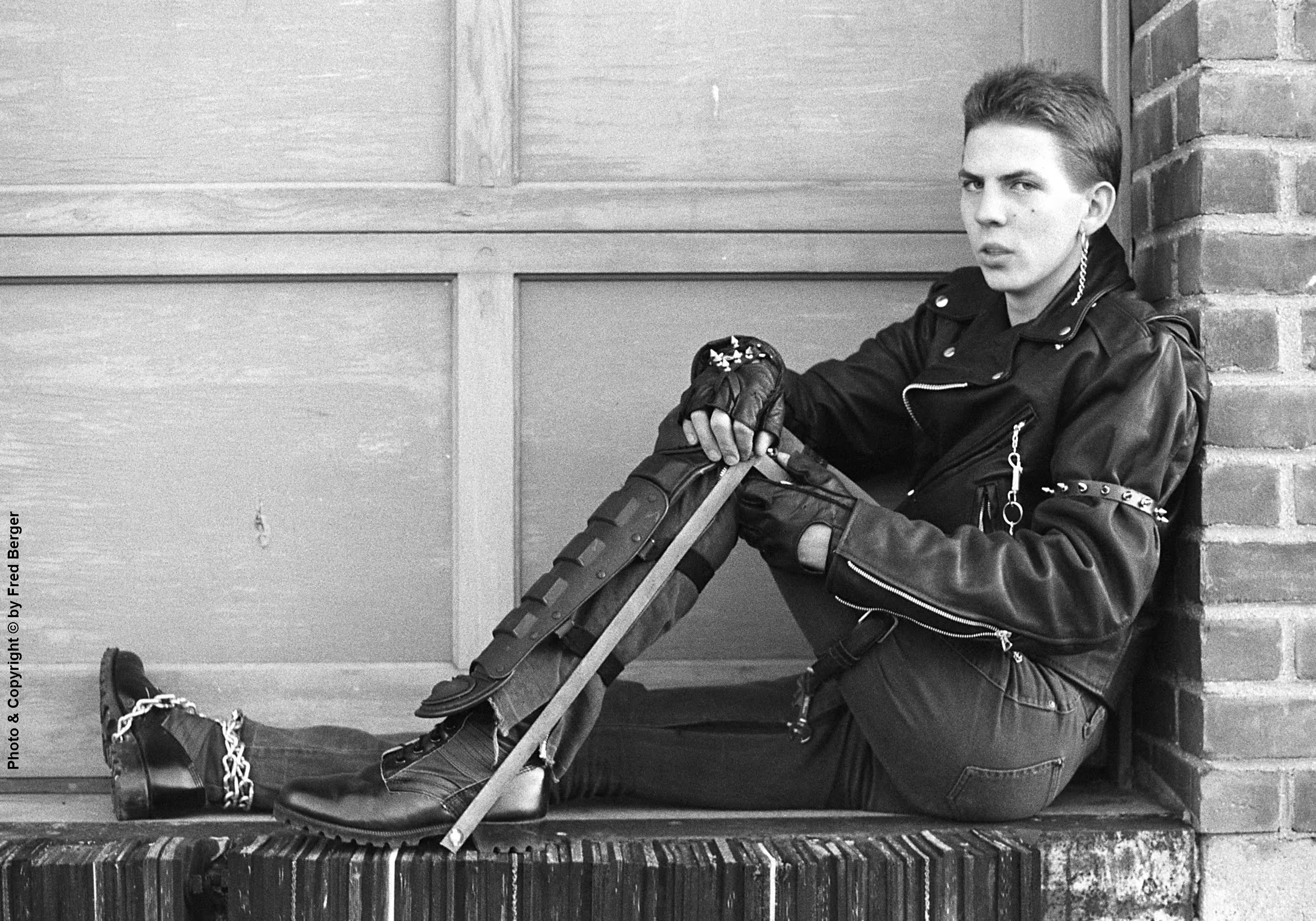
This horizontal Black & White photo depicts a prettier and more youthful version of Mad Max the Road Warrior from the sci-fi action movie franchise. He has short light brown hair and wears a black leather motorcycle jacket, black denim jeans, and combat boots. His left leg has a black baseball catcher’s shin guard and an improvised orthopedic metal leg brace, which he is adjusting with his right hand. He also wears black leather fingerless gloves with spiked metal studs, a chain earring, a black leather strap with spiked metal studs around his upper left arm, and a heavy chain wrapped around his right boot. His whole body is visible as he sits sideways on a loading dock with his head turned slightly toward the camera, which he makes eye contact with. His back leans against the brick wall of the loading dock, with his butt and left foot on the dock’s rubber bumper. The garage door of the loading dock is closed. The model is Rex and the photo was taken in 1982 by Propaganda publisher and editor Fred Berger.
Mad Max adjusting an improvised orthopedic brace for his injured leg. His battles against gangs of motorized raiders have taken their toll. (1982 “Mad Max Mode” photo-shoot. Photo & Copyright © by Fred Berger, model Rex)

The 1982 theatrical opening of the post-apocalyptic film Mad Max 2: The Road Warrior was a truly transformative event for me. Its dystopian vision of the collapse of civilization following a world war catered to my yearning for Armageddon, and the punk rock styling of its characters appealed to my anarchistic sensibilities. I was absolutely enamored of the mohawk berserker Wez and his gorgeous leather-clad boyfriend riding through the wasteland on his battle worn racing bike. The dopamine hit of that steamy love affair was matched only by the adrenalin rush of the fast-paced neo-primitive warfare fought on motorcycles and dune buggies. Four viewings of the film during its initial release left an indelible impression and prompted me to write an in-depth article about it. This extensive review with numerous production stills took up 12 pages in Propaganda Magazine #2, Winter 1983-84. The issue also featured a 4-page pictorial that I shot in 1982 and 1983, which was directly influenced by the movie. Furthermore, a 1985 interview I conducted with Vernon Wells, the actor who played Wez, was published in Propaganda #6, Spring 1986. Another Road Warrior inspired photo-shoot which I did in 1986 also appeared in that issue.
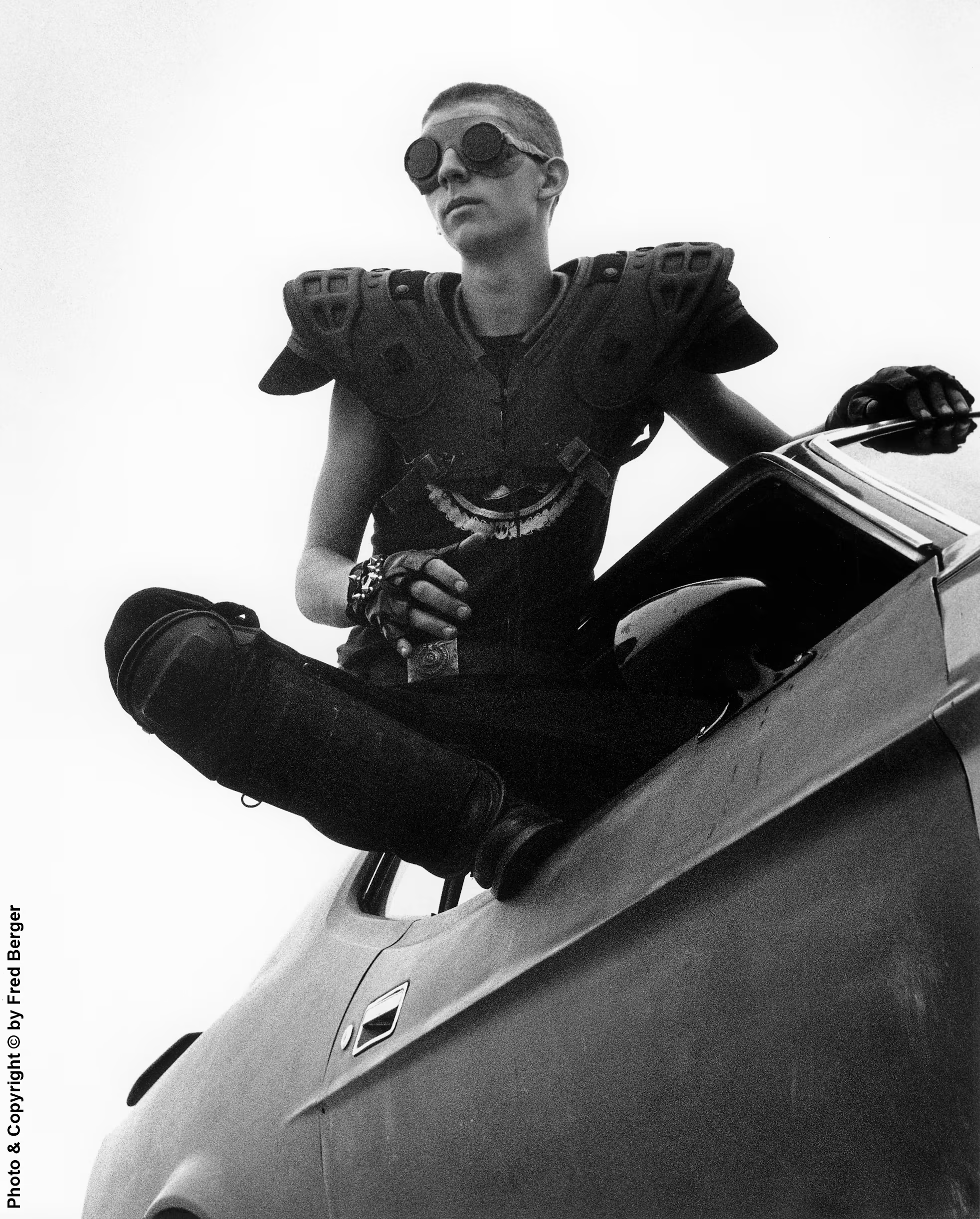
This vertical Black & White photo depicts a lean bodied punk rock warrior with a dirty blonde crewcut. His attire consists of black football shoulder pads, black baseball catcher’s shin guards, black t-shirt and jeans, a black leather belt with silver buckle, and black combat boots. He also wears World War 2 military style motorcycle goggles with two dark lenses and a gray leather frame, and black leather fingerless gloves with spiked silver studs fastened on the back. He is perched on the edge of the window of a dull gray 1971 Ford Mustang Mach 1 automobile, as if he’s about to leap out of the car and into the air against some off-camera opponent. His upper body and one leg are visible, as he poses like a compressed spring about to uncoil. He and the side of the car are seen from a low angle with the camera pointed upward into an overcast sky. The model is Rex and the photo was taken in 1983 by Propaganda publisher and editor Fred Berger.
This marauder of the wasteland is about to perform a daring stunt at highspeed as he and his cohorts battle Mad Max for scarce gasoline supplies. (1983 “Hardcore & Horsepower” photo-shoot. Photo & Copyright © by Fred Berger, model Rex)

The three shoots involved Propaganda model Rex, and they all took place in a rundown industrial park on Long Island, New York. The first one was the “Mad Max Mode” shoot where he played the title role, for which he fashioned a metal orthopedic leg brace according to what his character wore in the film. In the next shoot, entitled “Hardcore & Horsepower,” he portrayed one of the motorized marauders decked out in protective sports gear which he had spray-painted black. Using a 1971 Ford Mustang Mach 1 borrowed for the occasion, Rex posed in its window like a daredevil about to leap into the fray at breakneck speed. And with a prop Schmeisser MP-40 submachine gun in hand and a mohawk to top off his fierce look, he portrayed another warrior of the wasteland in the third shoot, entitled “Punk Terror.” The chain body harness and fishnet mask that he wore were of his own design, because in those days there was little on the market in the way of accessories for the stylish punk, goth, or fetishist. These diverse pictorials had the effect of firmly establishing Rex as a highly versatile master of disguise, with personas ranging from effeminate goth boy to brutal barbarian.
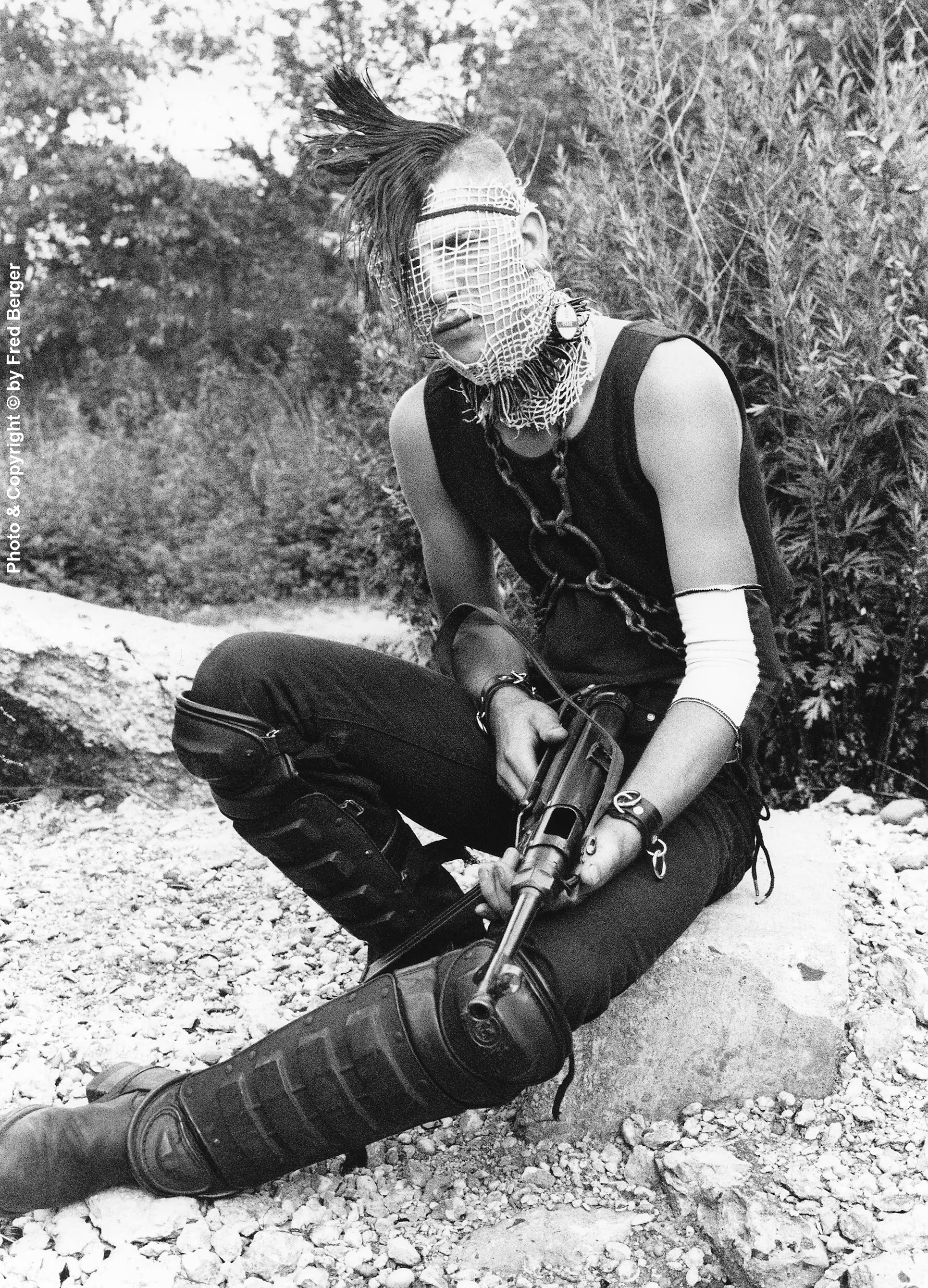
This vertical Black & White photo depicts a punker with a black mohawk which is spiked on top and dips down over his right eye. He’s wearing a fishnet mask over his face with a cutout for his mouth. His attire consists of a black tank top and jeans, black baseball catcher’s shin guards, and black leather biker boots. He also wears black leather bondage bracelets with silver rings, a black and white elbow pad on his left arm, and a chain harness around his upper torso. Sitting on the ruins of a concrete structure, he holds a prop Schmeisser MP-40 submachine gun, which rests on his left leg with the muzzle pointed slightly downward. His entire body is visible, and he faces the camera. In the background is a pile of rubble, bushes and trees. The model is Rex and the photo was taken in 1986 by Propaganda publisher and editor Fred Berger.
Not only is petrol in short supply in this post-World War 3 hellscape, but so are bullets for the few remaining functional firearms. (1986 “Punk Terror” photo-shoot. Photo & Copyright © by Fred Berger, model Rex)

Content © by Fred Berger

unique visitors