If Skulls Could Talk
Written by Smiley
Photos by Fred Berger
Hello, my name is Smiley, but I was best known among Propaganda Magazine fans as “the Propaganda skull.” I was its cover logo between 1984 and 1994 - half of its 20-years in print from 1982 to 2002. My selection was determined by the publisher, Fred Berger, who learned in his college advertising class that no graphic image grabs people’s attention more than a human skull. And with my grinning hollow-eyed visage positioned next to a title as provocative as “Propaganda,” the magazine’s masthead was a startling sight indeed. This allowed it to stand out from countless other periodicals which crowded the racks of book and magazine stores worldwide. Out of numerous public domain skulls that were considered, including pirate, masonic, fraternal, and military variants, Berger finally settled on my unique and striking combination of menace and beauty. The unknown artist who created me did so utilizing a stylized yet realistic aesthetic which was truly in a class of its own.
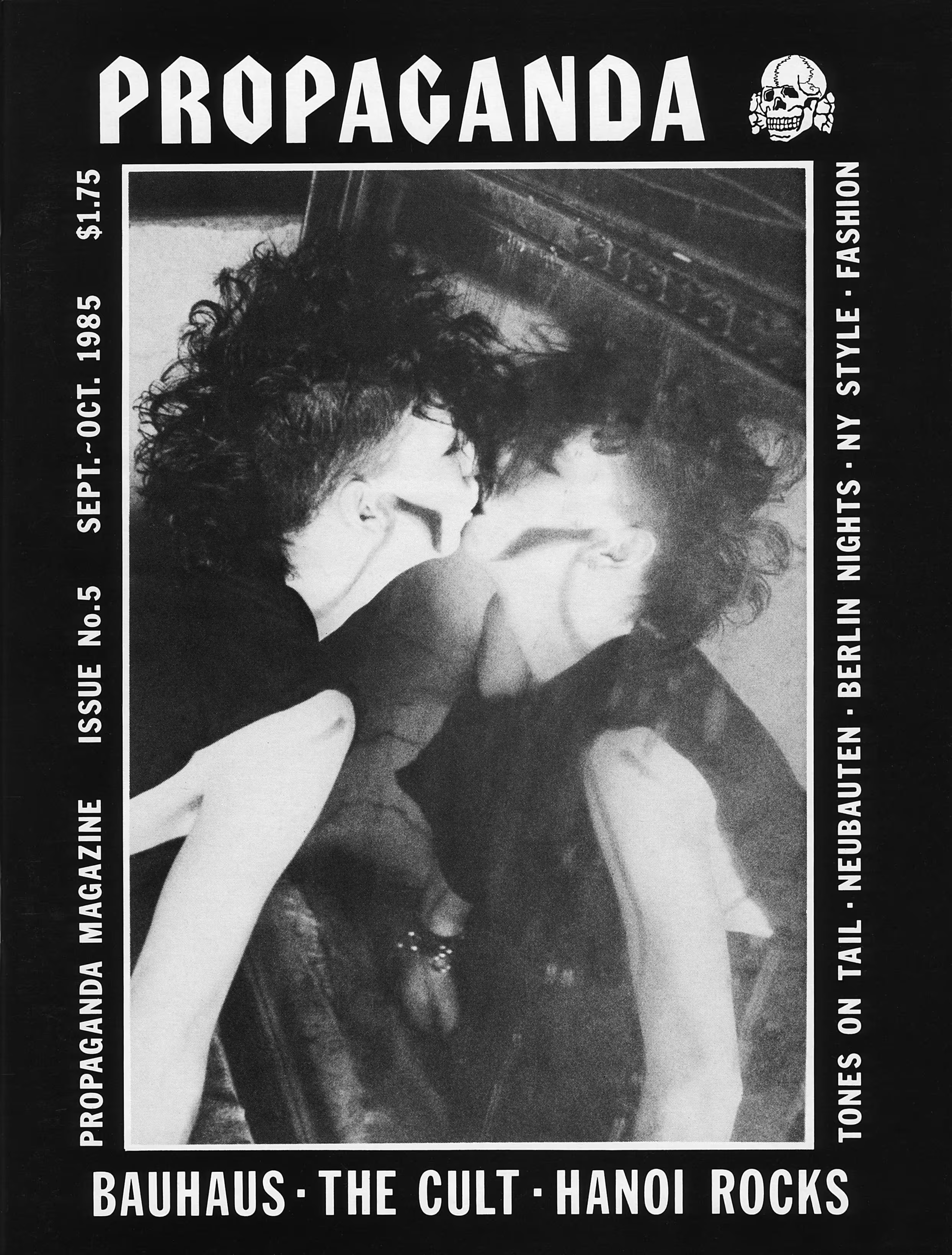
It is probably no coincidence that my presence on the cover occurred during the magazine’s greatest period of growth, when it was picked up by all the major channels of distribution serving every dark corner of Gothdom. I also graced the Propaganda T-shirt, which featured the magazine title on the front and me on the back with the ironically jocular slogan “Keep on smiling.” A puffy ink version was even produced, so the fans could lovingly run their fingers over the raised contours of my jaw, cheekbones, nasal cavity, eye sockets, and forehead. They were absolutely delighted with this iconography as the magazines and shirts literally flew off the racks in a whirlwind of counterculture exuberance. Evidently, I had helped to seduce an entire generation of darklings looking for meaning, direction, and a place in the world.

But here’s the rub – very few were aware of the brutal past from whence I emerged, a period of utter barbarism perpetrated by the Schutz Staffel (German for ‘Protection Squad’), better known as the SS. My fierce countenance, which they referred to as the Totenkopf (German for ‘Death’s Head’) appeared in several variations on their uniforms and banners. It became the ensign of their Aryan supremacist ideology, which they put into practice through ethnic cleansing across Europe during the Second World War. Despite such infamy, for the better part of the post-war era, in this case specifically the 1980s and ‘90s, this aspect of my background was not widely known outside of academic and political activist circles. Most were blissfully ignorant of my tainted history, and even those in the goth scene who were aware of it were not overly concerned, since the punk movement that preceded it employed the more blatant swastika without serious repercussions. Viewed as a symbol of youthful rebellion against the staid social norms of their parents’ generation, Sid Vicious, Siouxsie Sioux, and others sported it with a devil-may-care attitude. And the iconoclastic punk designer Vivienne Westwood famously produced a controversial T-shirt emblazoned with a swastika and an inverted Crucifix. Moreover, the renowned alternative fashion house Boy of London used the motif of a Third Reich eagle as its official logo, which has adorned its collections of club and street wear from its founding in 1976 to the present day.
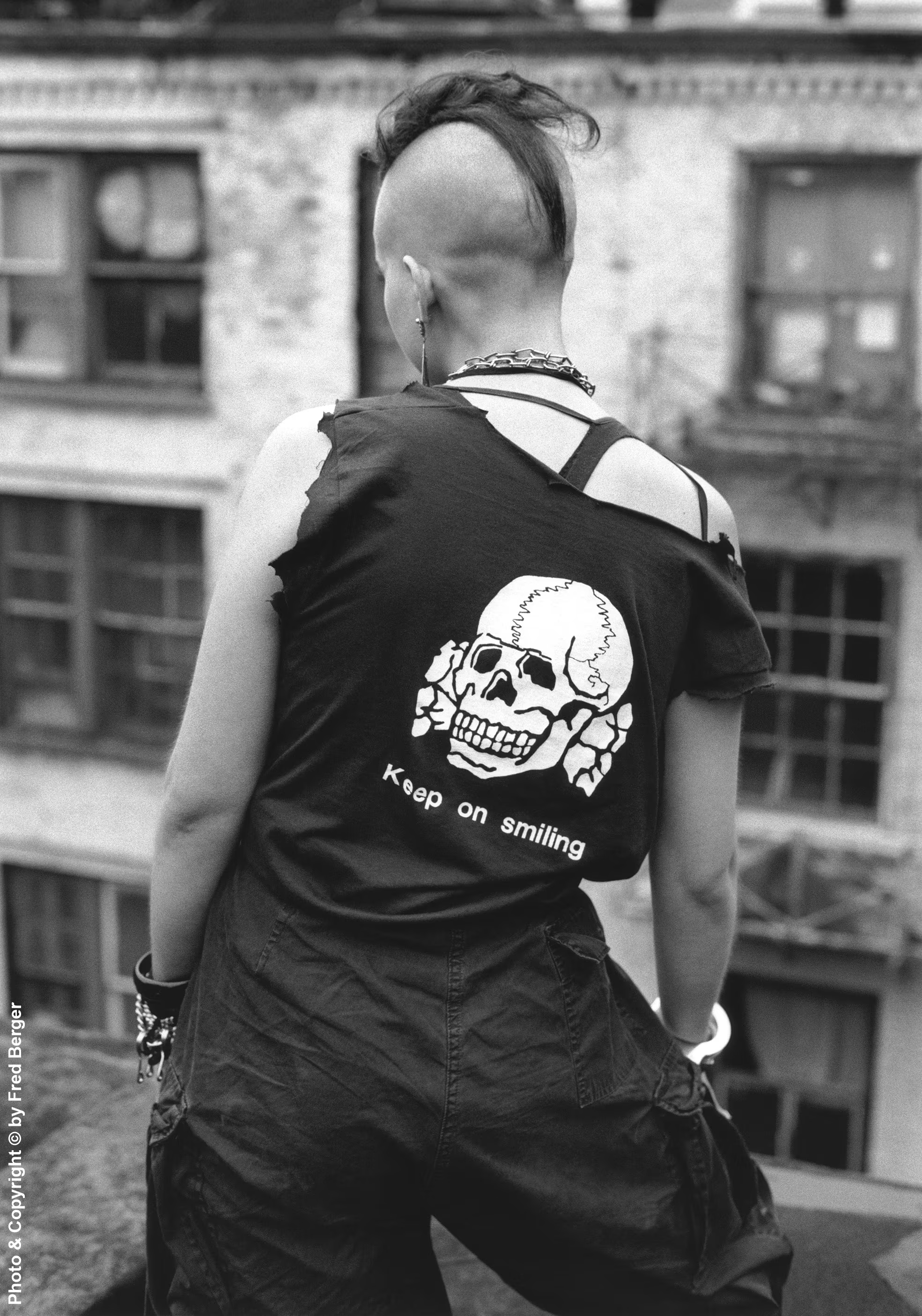
Propaganda adopted me as its mascot in the knowledge that the lifestyle it promoted was diametrically opposed to Hitler’s malevolent ultra-nationalist ideology. It was, in fact, an heir to Weimar Germany’s underground cabaret, avantgarde art, and queer subcultures which he deemed degenerate, and ruthlessly stamped out following his ascension to power. In that sense, Propaganda’s appropriation of my image divested National Socialism of one of its more powerful emblems and gave me a new purpose as a totem of radical beauty and emancipation. The fetishistic, androgynous, pansexual, and multi-racial character of the publication speaks for itself. Even so, I felt it incumbent upon myself to comment on this sensitive and complex topic, to provide context and perspective for a younger audience born too late to have experienced the origins of punk and goth. May history not judge its pioneers and provocateurs too harshly for the risks they took in their battle against the forces of conformity and intolerance, and most of all – for having prevailed in that struggle under the dictum of “the end justifies the means.”
Content © by Fred Berger
unique visitors